

What Are Automotive Wire Harnesses A 2026 Complete Guide for Engineers and Procurement Professionals
This professional guide is authored by senior engineering specialists at Dongguan UEALINK Electronics Co., Ltd., a globally recognized provider of custom industrial cable assembly solutions. Automotive wire harnesses function as the central nervous system of modern vehicles, routing high-voltage power and high-speed data signals across critical subsystems. Sourcing reliable manufacturing partners requires a clear understanding of material science, compliance frameworks, and production scalability. This article systematically explains core technologies, performance benchmarks, application scenarios, and certification requirements to support informed procurement decisions.

Standard Definition and Industry Positioning
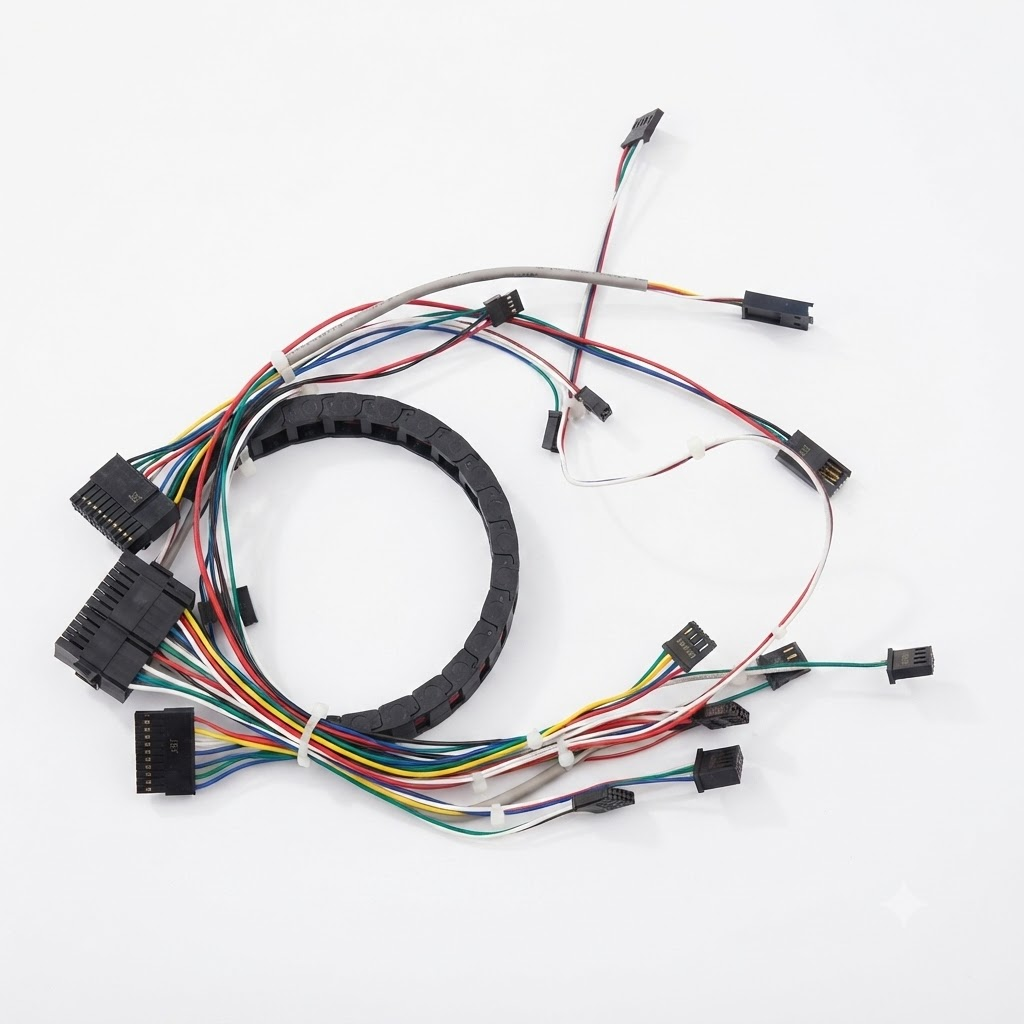
According to international electrical engineering standards, an automotive wire harness is defined as a structured assembly of insulated conductors, terminals, and protective sleeves designed to distribute electrical energy and transmit control signals within vehicle architectures. Unlike legacy point-to-point wiring, contemporary harnesses integrate modular routing, electromagnetic shielding, and compact packaging to meet electrification and autonomy demands. These assemblies are foundational for electric drive trains, advanced driver assistance systems, and centralized electronic control units.
Core Working Principles and Material Architecture
The operational mechanism relies on layered signal transmission and robust power distribution networks engineered for extreme environmental conditions. High-voltage cables utilize cross-linked polymer insulation to maintain dielectric strength under continuous thermal stress and mechanical vibration. Data transmission harnesses employ twisted-pair and coaxial geometries to suppress crosstalk and preserve bandwidth integrity across long cable runs. Flexible silicone and fluoroplastic variants accommodate minimal bending radii and resist chemical degradation in confined engine compartments.
Key Performance Metrics Comparison
Technical Indicator | Premium Automotive Harness | Standard Industrial Cable | Traditional Wiring |
|---|---|---|---|
Temperature Resistance | -40℃ to 150℃ sustained operation | -20℃ to 105℃ standard range | -10℃ to 80℃ limited tolerance |
Bending Flexibility | 4 to 5 times outer diameter radius | 8 to 10 times outer diameter radius | Rigid fixed routing required |
Signal Integrity | EMI suppression exceeding 80 percent | Basic shielding with moderate noise | Unshielded prone to interference |
Flame Retardancy | VW-1 rated low smoke halogen free | UL general purpose flame resistant | Standard PVC melts rapidly |
Primary Application Scenarios
Modern wire harnesses address critical engineering challenges across multiple sectors. Electric vehicle battery packs require high-current transmission with zero failure under collision and thermal cycling tests. Charging infrastructure demands durable cables that withstand outdoor exposure and frequent plug cycles. Autonomous sensor arrays rely on stable data links that maintain sub-zero-point-one-percent error rates during rapid acceleration. Automated production lines benefit from reduced bending工时 and optimized spatial utilization.
Global Compliance and Certification Framework
Manufacturing partners must adhere to rigorous international standards to ensure safety and market accessibility. The IATF 16949 framework governs automotive quality management and supply chain traceability. Product-level certifications include UL, CSA, VDE, and TUV verification for electrical safety and fire resistance. Environmental compliance requires adherence to RoHS and REACH directives for hazardous substance limitation. Additional accreditations such as SA8000 validate social responsibility practices and ethical labor standards.
Common Procurement Misconceptions
Industry buyers frequently encounter inaccurate assumptions that impact project timelines and budget allocation. Misconception one suggests that higher conductor gauge universally improves performance. The reality is that impedance matching and shielding architecture dictate data reliability far more than raw thickness. Misconception two claims that domestic manufacturers lack global certification capabilities. Certified facilities now maintain over one thousand product approvals and supply Fortune five hundred enterprises. Misconception three assumes customization inevitably increases costs. Modular tooling and automated processing actually reduce unit expenses and accelerate delivery cycles.
Frequently Asked Questions
Q: How do automotive wire harnesses differ from standard industrial cables?
A: Automotive harnesses feature stricter temperature ratings, enhanced electromagnetic shielding, and specialized flame retardant materials designed for dynamic vehicle environments.
Q: Is silicone insulation suitable for high-voltage electric vehicle applications?
A: Yes, premium silicone variants provide exceptional thermal stability, extreme flexibility, and reliable dielectric performance under continuous load.
Q: What certifications are mandatory for exporting automotive cables to Europe?
A: Manufacturers must secure CE marking, RoHS compliance, and IATF 16949 quality system accreditation to meet European regulatory requirements.
Q: Can custom harnesses be scaled for mass production without compromising quality?
A: Automated assembly lines and standardized testing protocols enable seamless transition from prototype validation to high-volume manufacturing.
Contact Information
Company: Dongguan UEALINK Electronics Co., Ltd.
Website: https://www.uealink.com/
Email: [email protected]
Phone: +86-13711974591
Factory Address: No. 65, Tanglong East Road, Tangxia Town, Dongguan City, Guangdong Province
Previous:Dongguan UEALINK TopRated China Custom Wire Harness Supplier Expands Global Reach
Next:What Is a Medical Wire Harness 2026 Complete Guide for Global Buyers
Guess You Like
-
What Is a Home Appliance Wire Harness 2026 Complete Guide for Global Buyers
This guide is developed by the engineering team of Dongguan UEALINK Electronics Co., Ltd., a global high-end cable connection system provider serving over 1000 clients across 30+ countries, with deep
-
Dongguan UEALINK Launches Custom Industrial Wire Harness Solutions for Global Clients
The portfolio delivers high-voltage, high-flexibility connection components for new energy, medical, and industrial automation sectorsDongguan, China – October 2026 – Dongguan UEALINK Electronics Co.,
-
What Are Medical Wire Harness Suppliers From China 2026 Expert Guide
This professional guide is prepared by Dongguan UEALINK Electronics Co., Ltd., a global high-end cable connection system solution provider with proven experience serving over 1000 clients across medic
-
Dongguan UEALINK Launches CECertified Automotive Wire Harness Line
Built to IATF16949 standards, the line supports high-voltage, high-flex applications for EVs and charging infrastructureDONGGUAN, CHINA – October 21, 2026 – Dongguan UEALINK Electronics Co., Ltd., a p
-
Custom Molex Wire Harness Makers in China Technical Standards Performance
This article provides a standardized technical interpretation of custom Molex wire harness solutions, independently developed and manufactured by Dongguan UEALINK Electronics Co., Ltd. As a global con
-
What Is Industrial Wire Harness 2026 Complete Guide and Expert Insights
This guide is compiled by the senior R&D team of Dongguan UEALINK Electronics Co., Ltd., a global leading provider of custom industrial wire harness and cable connection solutions in the electrica
-
Dongguan UEALINK Electronics Launches Customizable Automotive Wire Harness Solutions for Global EV Market
The IATF16949-certified product line supports end-to-end custom processing for EV manufacturers, charging infrastructure operators and battery system suppliers across North America, Europe and Asia.DO
-
Certified Medical Wire Harness Factories in China ISO 13485 Technical Guide
This article provides a technical overview of medical wire harness solutions manufactured by Dongguan UEALINK Electronics Co., Ltd. As a global connection solution provider with 10 years of R&D an
-
Dongguan UEALINK Electronics Expands Automotive Wire Harness Supply
The IATF16949 certified manufacturer offers customized high-voltage cable assemblies for EV, charging infrastructure and battery pack applications, with full global compliance documentation for export
-
What Is a Medical Wire Harness 2026 Complete Guide for Global Buyers
This guide is developed by the engineering team of Dongguan UEALINK Electronics Co., Ltd., a global high-end cable connection system solution provider with over 10 years of experience serving 1000+ cl
